EPUB · English
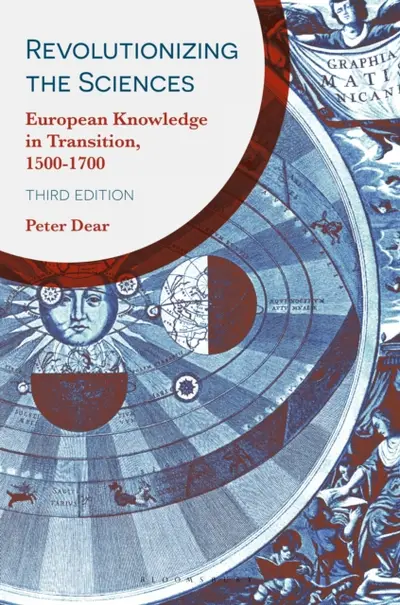
Revolutionizing the Sciences
European Knowledge in Transition, 1500-1700
Price and availability
$35.99
Available in: Andorra, Austria, Australia, Belgium, Bulgaria, Canada, Switzerland, Cyprus, Czechia, Germany, Denmark, Estonia, Spain, Finland, France, United Kingdom, Guernsey, Greece, Croatia, Hungary, Ireland, Isle of Man, Iceland, Italy, Jersey, Japan, Liechtenstein, Lithuania, Luxembourg, Latvia, Monaco, Malta, Netherlands, Norway, Poland, Portugal, Romania, Sweden, Slovenia, Slovakia, San Marino, United States, Vatican City, South Africa
Stores: US, UK, Canada, EU, Australia.
Sign in to buyThe price is re-checked by the server before payment.
For personal use under the eBook licence.
- Format
- EPUB
- DRM
- Not stated by the publisher
- Language
- English
- Publisher
- Bloomsbury Publishing
- Published
- 10 November 2018
- Pages
- 220
- ISBN
- 9781352003147
- Subjects
- Europe, c 1500 to c 1600, c 1600 to c 1700, European history, Early modern history: c 1450/1500 to c 1700, History of science, 3MD, 3MG, NH, NHD, History of science
About this book
This heavily revised third edition of an award-winning text offers a keen insight into the development of scientific thought in early modern Europe. Including coverage of the central scientific figures of the time, including Copernicus, Kelper, Galileo, Newton and Bacon, this book provides a comprehensive overview of how the Scientific Revolution happened and why. Highlighting Europe's colonial and trade expansion in the sixteenth and 17th centuries, Peter Dear traces the revolution in scientific thought that changed the natural world from something to be contemplated into something to be used. This book is ideal for undergraduate and postgraduate students of Early Modern history, European history, history of medicine, history of science and technology and the history and philosophy of science. The first edition was the winner of the Watson Davis and Helen Miles Davis Prize of the History of Science Society. New to this Edition:- Greater treatment of alchemy and associated craft activities, to reflect ongoing new scholarship- More focus on geographical issues, especially relating to Spain and its New World territories, as well as Eastern Europe, but also further afield in Islamic territories including the Ottoman Empire, and South and East Asia- New material on the themes of 'science and religion', gender and class- More extensive treatment of the relationship in this period of medicine to the various sciences and especially to new natural philosophies- Incorporation of new scholarship throughout- A whole chapter dedicated to Francis Bacon- Further discussion of the gendered elements of natural philosophy- A brand new historiographical essay
Bibliographic data © Gardners Books Ltd.