EPUB · English
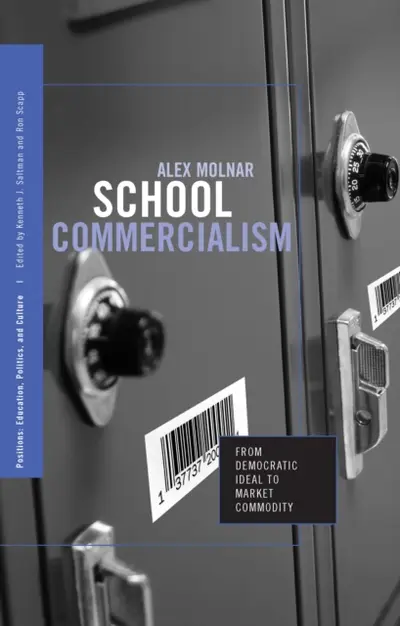
School Commercialism
From Democratic Ideal to Market Commodity
Price and availability
$56.99
Available in: Andorra, Austria, Australia, Belgium, Bulgaria, Canada, Switzerland, Cyprus, Czechia, Germany, Denmark, Estonia, Spain, Finland, France, United Kingdom, Guernsey, Greece, Croatia, Hungary, Ireland, Isle of Man, Iceland, Italy, Jersey, Japan, Liechtenstein, Lithuania, Luxembourg, Latvia, Monaco, Malta, Netherlands, Norway, Poland, Portugal, Romania, Sweden, Slovenia, Slovakia, San Marino, United States, Vatican City, South Africa
Stores: US, UK, Canada, EU, Australia.
Sign in to buyThe price is re-checked by the server before payment.
For personal use under the eBook licence.
- Format
- EPUB
- DRM
- Not stated by the publisher
- Language
- English
- Publisher
- Taylor & Francis
- Published
- 13 September 2013
- ISBN
- 9781136730160
- Subjects
- Sociology & anthropology, Education, Organization & management of education, Teaching skills & techniques, Business studies: general, United States of America, USA, Media studies: advertising and society, Educational strategies and policy, Public administration / Public policy
About this book
Pizza Hut's Book It! program rewards students with pizza for meeting their reading goals. Toys R Us paid a Kansas school five dollars for each student who took its toy survey. Cisco Systems donated internet access to a California elementary school, asking in return for the school choir to sing the company's praises while wearing Cisco t-shirts.Kids today face a barrage of corporate messages in the classroom. In School Commercialism , education expert Alex Molnar traces marketing in American schools over the last twenty-five years, raising serious questions about the role of private corporations in public education. Since the 1990s, Molnar argues, commercial activities have shaped the structure of the school day, influenced the curriculum, and determined whether children have access to computers and other technologies. He argues convincingly against advertisers' assertion that their contributions are a win-win proposition for cash-strapped schools and image-conscious companies.From the marketing of unhealthy foods to privatizing reforms such as the Edison Schools and Knowledge Universe, School Commercialism tracks trends that are more pervasive than many parents realize and shows how we might recapture schools to better serve the public interest.
Bibliographic data © Gardners Books Ltd.