PDF · English
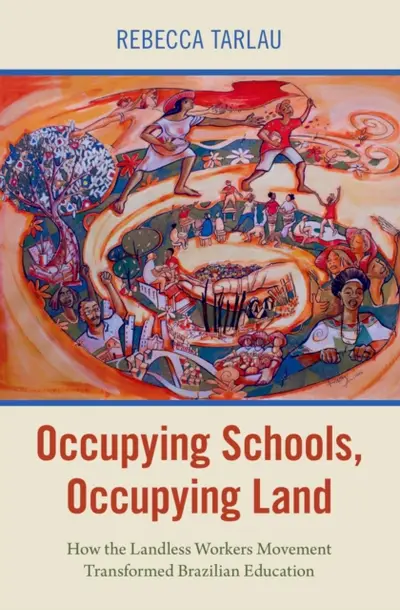
Occupying Schools, Occupying Land
How the Landless Workers Movement Transformed Brazilian Education
Price and availability
$28.99
Available in: Andorra, Austria, Australia, Belgium, Bulgaria, Canada, Switzerland, Cyprus, Czechia, Germany, Denmark, Estonia, Spain, Finland, France, United Kingdom, Guernsey, Greece, Croatia, Hungary, Ireland, Isle of Man, Iceland, Italy, Jersey, Japan, Liechtenstein, Lithuania, Luxembourg, Latvia, Monaco, Malta, Netherlands, Norway, Poland, Portugal, Romania, Sweden, Slovenia, Slovakia, San Marino, United States, Vatican City, South Africa
Stores: US, UK, Canada, EU, Australia.
Sign in to buyThe price is re-checked by the server before payment.
For personal use under the eBook licence.
- Format
- DRM
- Not stated by the publisher
- Language
- English
- Publisher
- Oxford University Press
- Published
- 7 May 2019
- ISBN
- 9780190870348
- Subjects
- Developing countries, Development studies, Social & cultural history, Society & culture: general, Social discrimination & inequality, Ethnic studies, Ethnic minorities & multicultural studies, Sociology, Social theory, Education, International institutions, Global South / Developing countries, Reception or Interpretation studies / Audience Theory, JB, JBFA, JBSL, JBSL1, Sociology, Social theory, Education / Educational sciences / Pedagogy, International institutions / intergovernmental organizations, NHTB
About this book
Over the past thirty-five years the Brazilian Landless Workers Movement (MST), one of the largest social movements in Latin America, has become famous globally for its success in occupying land, winning land rights, and developing alternative economic enterprises for over a million landless workers. The movement has also linked education reform to its vision for agrarian reform by developing pedagogical practices for schools that foster activism, direct democracy, and collective forms of work. In Occupying Schools, Occupying Land, Rebecca Tarlau explores how MST activists have pressured municipalities, states, and the federal government to implement their educational program in public schools and universities, affecting hundreds of thousands of students. Contrary to the belief that movements cannot engage the state without demobilizing, Tarlau shows how educational institutions can help movements recruit new activists, diversify their membership, increase technical knowledge, and garner political power. Drawing on twenty months of ethnographic field work, Tarlau documents how the MST operates in different regions working at times with or through the state, at other times outside it and despite it. She argues that activists are most effective using contentious co-governance, combining disruption and public protest with institutional pressure to defend and further their goals. Through an examination of the potentials, constraints, failures, and contradictions of the MST's educational struggle, Occupying Schools, Occupying Land offers insights into the ways education can promote social change, the interactions between social movements and states, and the barriers and possibilities for similar reforms in democratic contexts throughout the world.
Bibliographic data © Gardners Books Ltd.