PDF · German
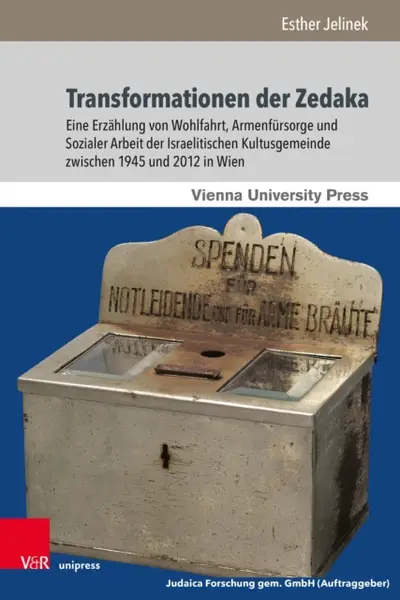
Transformationen der Zedaka
Eine Erzählung von Wohlfahrt, Armenfürsorge und Sozialer Arbeit der Israelitischen Kultusgemeinde zwischen 1945 und 2012 in Wien
Price and availability
$67.99
Available in: Andorra, Austria, Australia, Belgium, Bulgaria, Canada, Switzerland, Cyprus, Czechia, Germany, Denmark, Estonia, Spain, Finland, France, United Kingdom, Guernsey, Greece, Croatia, Hungary, Ireland, Isle of Man, Iceland, Italy, Jersey, Japan, Liechtenstein, Lithuania, Luxembourg, Latvia, Monaco, Malta, Netherlands, Norway, Poland, Portugal, Romania, Sweden, Slovenia, Slovakia, San Marino, United States, Vatican City, South Africa
Stores: US, UK, Canada, EU, Australia.
Sign in to buyThe price is re-checked by the server before payment.
For personal use under the eBook licence.
- Format
- DRM
- Not stated by the publisher
- Language
- German
- Publisher
- Brill Deutschland GmbH
- Published
- 15 July 2024
- ISBN
- 9783847017165
- Subjects
- 20th century, Social & cultural history, Welfare & benefit systems, Vienna, Welfare and benefit systems, Social and cultural history
About this book
Da der österreichische Staat die Fürsorge von Holocaust-Überlebenden verweigerte, lag die Verantwortung bei der jüdischen Gemeinde selbst. Der Fokus des Werkes liegt auf der Stadt Wien im Zeitraum zwischen 1945 und 2012, einer Periode, die gekennzeichnet war von den sehr unterschiedlichen Bedürfnissen der Holocaust-Überlebenden, der Remigrierten und neu Zugewanderten. Beleuchtet werden Formen der klassischen Zedaka, der Armenfürsorge sowie der Wandel zur professionellen Sozialen Arbeit. Die jüdische Gemeinde verfügte zunächst nicht über adäquate Mittel, weshalb es erst spät zur Professionalisierung kam, die in der Gründung des psychosozialen Zentrums ESRA mündete. Die deskriptive Quellendarlegung belegt sowohl anhand von personenbezogenen archivalischen Akten als auch von medialen, dokumentarischen und mündlichen Materialien den Bedarf der Israelitischen Kultusgemeinde Wien an Fürsorge und Sozialer Arbeit.As the Austrian state refused to care for Holocaust survivors, the responsibility lay with the Jewish community itself. The focus of the Vienna-related work is on the time between 1945 and 2012, a period that was characterized by the very different needs of Holocaust survivors, remigrants and new immigrants. Forms of classical Zedaka, care for the poor and the transformation to professional social work throughout this period are examined. The descriptive depiction of sources illustrates the needs of the Jewish Community (IKG) Vienna for welfare and social work on the basis of personal archival files as well as media, documentary and oral materials.
Bibliographic data © Gardners Books Ltd.