PDF · English
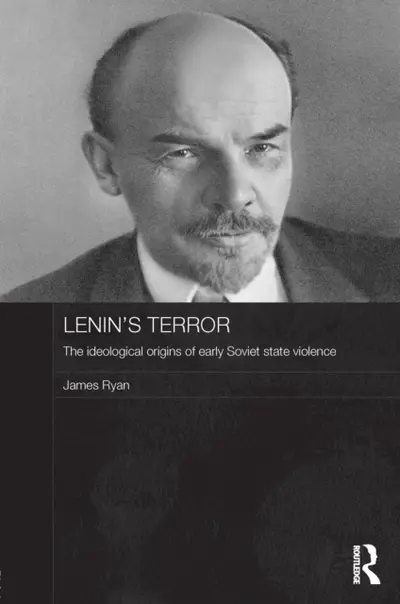
Lenin's Terror
The Ideological Origins of Early Soviet State Violence
Price and availability
$83.99
Available in: Andorra, Austria, Australia, Belgium, Bulgaria, Canada, Switzerland, Cyprus, Czechia, Germany, Denmark, Estonia, Spain, Finland, France, United Kingdom, Guernsey, Greece, Croatia, Hungary, Ireland, Isle of Man, Iceland, Italy, Jersey, Japan, Liechtenstein, Lithuania, Luxembourg, Latvia, Monaco, Malta, Netherlands, Norway, Poland, Portugal, Romania, Sweden, Slovenia, Slovakia, San Marino, United States, Vatican City, South Africa
Stores: US, UK, Canada, EU, Australia.
Sign in to buyThe price is re-checked by the server before payment.
For personal use under the eBook licence.
- Format
- DRM
- Not stated by the publisher
- Language
- English
- Publisher
- Taylor & Francis
- Published
- 25 June 2012
- ISBN
- 9781136296512
- Subjects
- European history, 20th century history: c 1900 to c 2000, Political oppression & persecution, Russia, Political ideologies and movements, European history
About this book
This book explores the development of Lenin's thinking on violence throughout his career, from the last years of the Tsarist regime in Russia through to the 1920s and the New Economic Policy, and provides an important assessment of the significance of ideological factors for understanding Soviet state violence as directed by the Bolshevik leadership during its first years in power. It highlights the impact of the First World War, in particular its place in Bolshevik discourse as a source of legitimating Soviet state violence after 1917, and explains the evolution of Bolshevik dictatorship over the half decade during which Lenin led the revolutionary state. It examines the militant nature of the Leninist worldview, Lenin's conception of the revolutionary state, the evolution of his understanding of "e;dictatorship of the proletariat"e;, and his version of "e;just war"e;. The book argues that ideology can be considered primarily important for understanding the violent and dictatorial nature of the early Soviet state, at least when focused on the party elite, but it is also clear that ideology cannot be understood in a contextual vacuum. The oppressive nature of Tsarist rule, the bloodiness of the First World War, and the vulnerability of the early Soviet state as it struggled to survive against foreign and domestic opponents were of crucial significance. The book sets Lenin's thinking on violence within the wider context of a violent world.
Bibliographic data © Gardners Books Ltd.