PDF · English
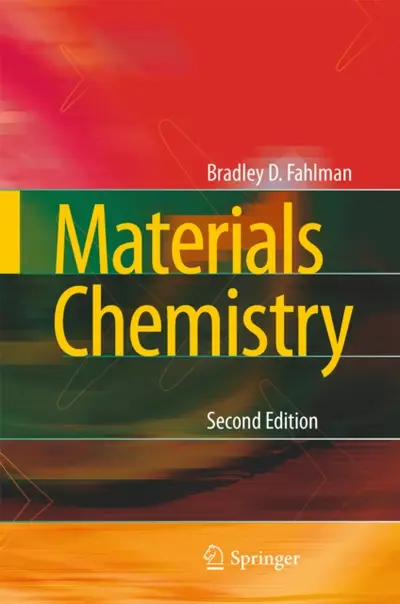
Materials Chemistry
Price and availability
$114.99
Available in: Andorra, Austria, Australia, Belgium, Bulgaria, Canada, Switzerland, Cyprus, Czechia, Germany, Denmark, Estonia, Spain, Finland, France, United Kingdom, Guernsey, Greece, Croatia, Hungary, Ireland, Isle of Man, Iceland, Italy, Jersey, Japan, Liechtenstein, Lithuania, Luxembourg, Latvia, Monaco, Malta, Netherlands, Norway, Poland, Portugal, Romania, Sweden, Slovenia, Slovakia, San Marino, United States, Vatican City, South Africa
Stores: US, UK, Canada, EU, Australia.
Sign in to buyThe price is re-checked by the server before payment.
For personal use under the eBook licence.
- Format
- DRM
- Not stated by the publisher
- Language
- English
- Publisher
- Springer Netherlands
- Published
- 18 March 2011
- ISBN
- 9789400706934
- Subjects
- Chemistry, Materials science, Condensed matter physics (liquid state and solid state physics), Nanotechnology, Materials science, Engineering applications of polymers and composites, Testing of materials
About this book
The 2nd edition of Materials Chemistry builds on the strengths that were recognized by a 2008 Textbook Excellence Award from the Text and Academic Authors Association (TAA). Materials Chemistry addresses inorganic-, organic-, and nano-based materials from a structure vs. property treatment, providing a suitable breadth and depth coverage of the rapidly evolving materials field - in a concise format. The 2nd edition continues to offer innovative coverage and practical perspective throughout, e.g.: the opening solid-state chemistry chapter uses color illustrations of crystalline unit cells and digital photos of models to clarify their structures. This edition features more archetypical unit cells and includes fundamental principles of X-ray crystallography and band theory. In addition, an ample amorphous-solids section has been expanded to include more details regarding zeolite syntheses, as well as ceramics classifications and their biomaterial applications. The subsequent metals chapter has been re-organized for clarity, and continues to treat the full spectrum of powder metallurgical methods, complex phase behaviors of the Fe-C system and steels, and topics such as corrosion and shape-memory properties. The mining/processing of metals has also been expanded to include photographs of various processes occurring in an actual steelmaking plant. The semiconductor chapter addresses evolution and limitations/solutions of modern transistors, as well as IC fabrication and photovoltaics. Building on the fundamentals presented earlier, more details regarding the band structure of semiconductors is now included, as well as discussions of GaAs vs. Si for microelectronics applications, and surface reconstruction nomenclature. The emerging field of 'soft lithographic' patterning is now included in this chapter, and thin film deposition methodologies are also greatly expanded to now include more fundamental aspects of chemical vapor deposition (CVD) and atomic layer deposition (ALD). The polymer and 'soft' materials chapter represents the largest expansion for the 2nd edition. This chapter describes all polymeric classes including dendritic polymers, as well as important additives such as plasticizers and flame-retardants, and emerging applications such as molecular magnets and self-repairing polymers. This edition now features 'click chemistry' polymerization, silicones, conductive polymers and biomaterials applications such as biodegradable polymers, biomedical devices, drug delivery, and contact lenses. Final chapters on nanomaterials and materials-characterization techniques are also carefully surveyed, focusing on nomenclature, synthetic techniques, and applications taken from the latest scientific literature. The 2nd edition has been significantly updated to now include nanotoxicity, vapor-phase growth of 0-D nanostructures, and more details regarding synthetic techniques and mechanisms for solution-phase growth of various nanomaterials. Graphene,recognized by the 2010 Nobel Prize in Physics, is now also included in this edition. Most appropriate for Junior/Senior undergraduate students, as well as first-year graduate students in chemistry, physics, or engineering fields, Materials Chemistry may also serve as a valuable reference to industrial researchers. Each chapter concludes with a section that describes important materials applications, and an updated list of thought-provoking questions. The appendices have also been updated with additional laboratory modules for materials synthesis (e.g., porous silicon) and a comprehensive timeline of major materials developments.
Bibliographic data © Gardners Books Ltd.