PDF · English
Data Architecture: A Primer for the Data Scientist
A Primer for the Data Scientist
Price and availability
$72.99
Available in: Andorra, Austria, Australia, Belgium, Bulgaria, Canada, Switzerland, Cyprus, Czechia, Germany, Denmark, Estonia, Spain, Finland, France, United Kingdom, Guernsey, Greece, Croatia, Hungary, Ireland, Isle of Man, Iceland, Italy, Jersey, Japan, Liechtenstein, Lithuania, Luxembourg, Latvia, Monaco, Malta, Netherlands, Norway, Poland, Portugal, Romania, Sweden, Slovenia, Slovakia, San Marino, United States, Vatican City, South Africa
Stores: US, UK, Canada, EU, Australia.
Sign in to buyThe price is re-checked by the server before payment.
For personal use under the eBook licence.
- Format
- DRM
- Not stated by the publisher
- Language
- English
- Publisher
- Elsevier Science
- Published
- 30 April 2019
- ISBN
- 9780128169179
- Subjects
- Operational research, Enterprise software, Databases, Information architecture, Operational research, Enterprise software
About this book
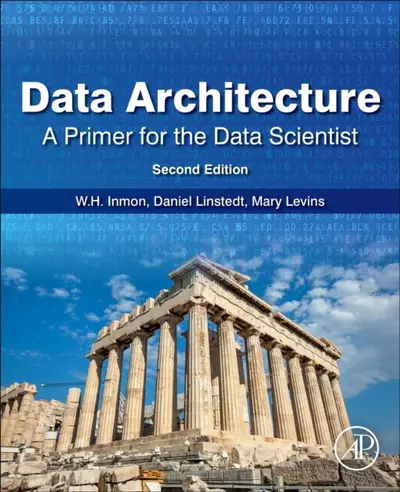
Over the past 5 years, the concept of big data has matured, data science has grown exponentially, and data architecture has become a standard part of organizational decision-making. Throughout all this change, the basic principles that shape the architecture of data have remained the same. There remains a need for people to take a look at the "e;bigger picture"e; and to understand where their data fit into the grand scheme of things. Data Architecture: A Primer for the Data Scientist, Second Edition addresses the larger architectural picture of how big data fits within the existing information infrastructure or data warehousing systems. This is an essential topic not only for data scientists, analysts, and managers but also for researchers and engineers who increasingly need to deal with large and complex sets of data. Until data are gathered and can be placed into an existing framework or architecture, they cannot be used to their full potential. Drawing upon years of practical experience and using numerous examples and case studies from across various industries, the authors seek to explain this larger picture into which big data fits, giving data scientists the necessary context for how pieces of the puzzle should fit together. - New case studies include expanded coverage of textual management and analytics- New chapters on visualization and big data- Discussion of new visualizations of the end-state architecture
Bibliographic data © Gardners Books Ltd.