PDF · English
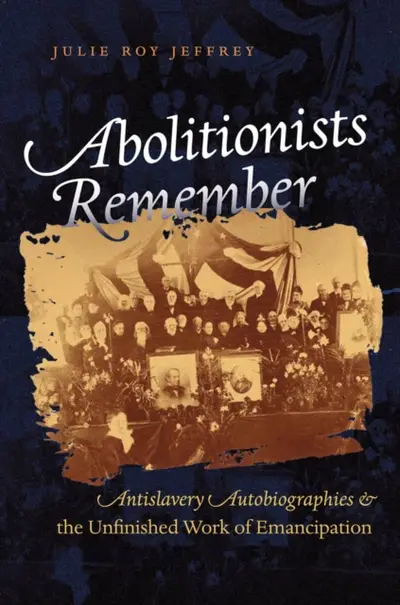
Abolitionists Remember
Antislavery Autobiographies and the Unfinished Work of Emancipation
Price and availability
$40.99
Available in: Andorra, Austria, Australia, Belgium, Bulgaria, Canada, Switzerland, Cyprus, Czechia, Germany, Denmark, Estonia, Spain, Finland, France, United Kingdom, Guernsey, Greece, Croatia, Hungary, Ireland, Isle of Man, Iceland, Italy, Jersey, Japan, Liechtenstein, Lithuania, Luxembourg, Latvia, Monaco, Malta, Netherlands, Norway, Poland, Portugal, Romania, Sweden, Slovenia, Slovakia, San Marino, United States, Vatican City, South Africa
Stores: US, UK, Canada, EU, Australia.
Sign in to buyThe price is re-checked by the server before payment.
For personal use under the eBook licence.
- Format
- DRM
- Not stated by the publisher
- Language
- English
- Publisher
- The University of North Carolina Press
- Published
- 1 February 2012
- ISBN
- 9798890882998
- Subjects
- USA, History of the Americas, Slavery & abolition of slavery, American Civil War, Social discrimination & inequality, Black & Asian studies, United States of America, USA, Social discrimination and social justice, Ethnic studies / Ethnicity, History of the Americas
About this book
In Abolitionists Remember, Julie Roy Jeffrey illuminates a second, little-noted antislavery struggle as abolitionists in the postwar period attempted to counter the nations growing inclination to forget why the war was fought, what slavery was really like, and why the abolitionist cause was so important.In the rush to mend fences after the Civil War, the memory of the past faded and turned romantic slaves became quaint, owners kindly, and the war itself a noble struggle for the Union. Jeffrey examines the autobiographical writings of former abolitionists such as Laura Haviland, Frederick Douglass, Parker Pillsbury, and Samuel J. May, revealing that they wrote not only to counter the popular image of themselves as fanatics, but also to remind readers of the harsh reality of slavery and to advocate equal rights for African Americans in an era of growing racism, Jim Crow, and the Ku Klux Klan. These abolitionists, who went to great lengths to get their accounts published, challenged every important point of the reconciliation narrative, trying to salvage the nobility of their work for emancipation and African Americans and defending their own participation in the great events of their day.
Bibliographic data © Gardners Books Ltd.