PDF · English
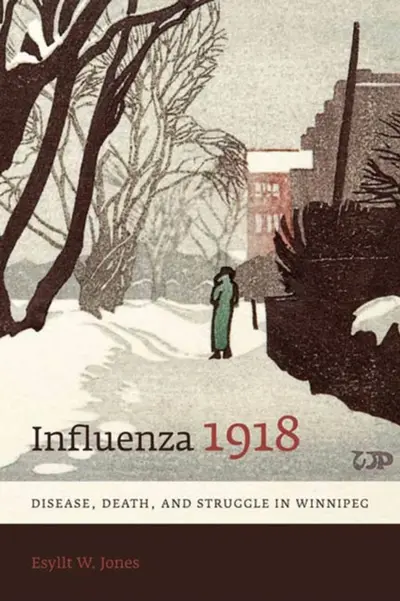
Influenza 1918
Disease, Death, and Struggle in Winnipeg
Price and availability
$45.99
Available in: Andorra, Austria, Australia, Belgium, Bulgaria, Canada, Switzerland, Cyprus, Czechia, Germany, Denmark, Estonia, Spain, Finland, France, United Kingdom, Guernsey, Greece, Croatia, Hungary, Ireland, Isle of Man, Iceland, Italy, Jersey, Japan, Liechtenstein, Lithuania, Luxembourg, Latvia, Monaco, Malta, Netherlands, Norway, Poland, Portugal, Romania, Sweden, Slovenia, Slovakia, San Marino, United States, Vatican City, South Africa
Stores: US, UK, Canada, EU, Australia.
Sign in to buyThe price is re-checked by the server before payment.
For personal use under the eBook licence.
- Format
- DRM
- Not stated by the publisher
- Language
- English
- Publisher
- University of Toronto Press
- Published
- 31 December 2007
- Pages
- 240
- ISBN
- 9781442685574
- Subjects
- Canada, Manitoba, c 1918 to c 1939 (Inter-war period), History of the Americas, 20th century history: c 1900 to c 2000, Social & cultural history, History of medicine, Infectious & contagious diseases, Canada, 1KBC-CA-C, 3MPBG, History of medicine, Infectious and contagious diseases, NH, NHK, NHTB
About this book
The influenza pandemic of 1918-1919 killed as many as fifty million people worldwide and affected the vast majority of Canadians. Yet the pandemic, which came and left in one season, never to recur in any significant way, has remained difficult to interpret. What did it mean to live through and beyond this brief, terrible episode, and what were its long-term effects? Influenza 1918 uses Winnipeg as a case study to show how disease articulated abd helped to re-define boundaries of social difference. Esyllt W. Jones examines the impact of the pandemic in this fragmented community, including its role in the eruption of the largest labour confrontation in Canadian history, the Winnipeg General Strike of 1919. Arguing that labour historians have largely ignored the impact of infectious disease upon the working class, Jones draws on a wide range of primary sources including mothers' allowance and orphanage case files in order to trace the pandemic's affect on the family, the public health infrastructure, and other social institutions. This study brings into focus the interrelationships between epidemic disease and working class, gender, labour, and ethnic history in Canada.Influenza 1918 concludes that social conflict is not an inevitable outcome of epidemics, but rather of inequality and public failure to fully engage all members of the community in the fight against disease.
Bibliographic data © Gardners Books Ltd.