EPUB · English
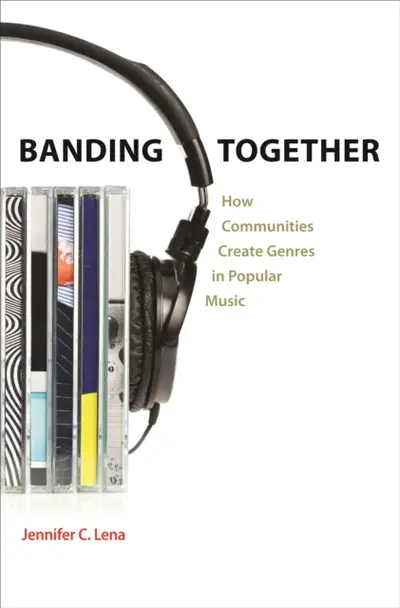
Banding Together
How Communities Create Genres in Popular Music
Price and availability
$43.99
Available in: Andorra, Austria, Australia, Belgium, Bulgaria, Canada, Switzerland, Cyprus, Czechia, Germany, Denmark, Estonia, Spain, Finland, France, United Kingdom, Guernsey, Greece, Croatia, Hungary, Ireland, Isle of Man, Iceland, Italy, Jersey, Japan, Liechtenstein, Lithuania, Luxembourg, Latvia, Monaco, Malta, Netherlands, Norway, Poland, Portugal, Romania, Sweden, Slovenia, Slovakia, San Marino, United States, Vatican City, South Africa
Stores: US, UK, Canada, EU, Australia.
Sign in to buyThe price is re-checked by the server before payment.
For personal use under the eBook licence.
- Format
- EPUB
- DRM
- Not stated by the publisher
- Language
- English
- Publisher
- Princeton University Press
- Published
- 12 February 2012
- ISBN
- 9781400840458
- Subjects
- Music, Popular culture, Sociology, Music, Popular culture, Sociology
About this book
Why do some music styles gain mass popularity while others thrive in small niches? Banding Together explores this question and reveals the attributes that together explain the growth of twentieth-century American popular music. Drawing on a vast array of examples from sixty musical styles--ranging from rap and bluegrass to death metal and South Texas polka, and including several created outside the United States--Jennifer Lena uncovers the shared grammar that allows us to understand the cultural language and evolution of popular music. What are the common economic, organizational, ideological, and aesthetic traits among contemporary genres? Do genres follow patterns in their development? Lena discovers four dominant forms--Avant-garde, Scene-based, Industry-based, and Traditionalist--and two dominant trajectories that describe how American pop music genres develop. Outside the United States there exists a fifth form: the Government-purposed genre, which she examines in the music of China, Serbia, Nigeria, and Chile. Offering a rare analysis of how music communities operate, she looks at the shared obstacles and opportunities creative people face and reveals the ways in which people collaborate around ideas, artworks, individuals, and organizations that support their work.
Bibliographic data © Gardners Books Ltd.