EPUB · English
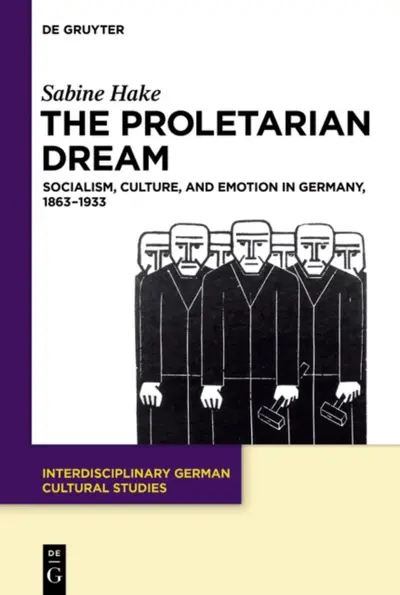
Proletarian Dream
Socialism, Culture, and Emotion in Germany, 1863–1933
Price and availability
$154.99
Available in: Andorra, Austria, Australia, Belgium, Bulgaria, Canada, Switzerland, Cyprus, Czechia, Germany, Denmark, Estonia, Spain, Finland, France, United Kingdom, Guernsey, Greece, Croatia, Hungary, Ireland, Isle of Man, Iceland, Italy, Jersey, Japan, Liechtenstein, Lithuania, Luxembourg, Latvia, Monaco, Malta, Netherlands, Norway, Poland, Portugal, Romania, Sweden, Slovenia, Slovakia, San Marino, United States, Vatican City, South Africa
Stores: US, UK, Canada, EU, Australia.
Sign in to buyThe price is re-checked by the server before payment.
For personal use under the eBook licence.
- Format
- EPUB
- DRM
- Not stated by the publisher
- Language
- English
- Publisher
- De Gruyter
- Published
- 11 September 2017
- ISBN
- 9783110550207
- Subjects
- Germany, German, French, c 1800 to c 1900, 20th century, Literature: history & criticism, Literary studies: general, General & world history, European history, Modern history to 20th century: c 1700 to c 1900, 20th century history: c 1900 to c 2000, Social & cultural history, Society & culture: general, Cultural studies, Literary studies: general
About this book
The proletariat never existed-but it had a profound effect on modern German culture and society. As the most radicalized part of the industrial working class, the proletariat embodied the critique of capitalism and the promise of socialism. But as a collective imaginary, the proletariat also inspired the fantasies, desires, and attachments necessary for transforming the working class into a historical subject and an emotional community. This book reconstructs this complicated and contradictory process through the countless treatises, essays, memoirs, novels, poems, songs, plays, paintings, photographs, and films produced in the name of the proletariat. The Proletarian Dream reads these forgotten archives as part of an elusive collective imaginary that modeled what it meant-and even more important, how it felt-to claim the name "e;proletarian"e; with pride, hope, and conviction. By emphasizing the formative role of the aesthetic, the eighteen case studies offer a new perspective on working-class culture as a oppositional culture. Such a new perspective is bound to shed new light on the politics of emotion during the main years of working-class mobilizations and as part of more recent populist movements and cultures of resentment. Aldo and Jeanne Scaglione Prize for Studies in Germanic Languages and Literatures 2018
Bibliographic data © Gardners Books Ltd.