PDF · English
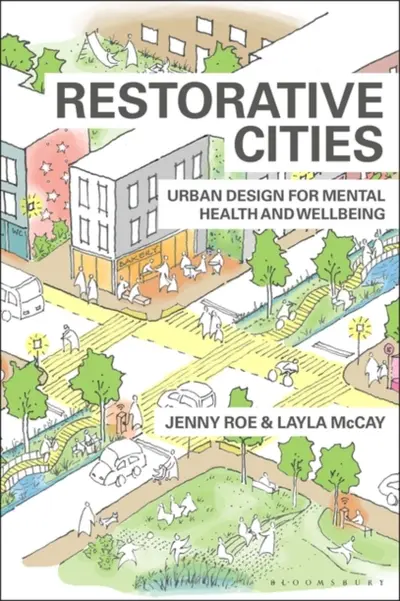
Restorative Cities
urban design for mental health and wellbeing
Price and availability
$34.99
Available in: Andorra, Austria, Australia, Belgium, Bulgaria, Canada, Switzerland, Cyprus, Czechia, Germany, Denmark, Estonia, Spain, Finland, France, United Kingdom, Guernsey, Greece, Croatia, Hungary, Ireland, Isle of Man, Iceland, Italy, Jersey, Japan, Liechtenstein, Lithuania, Luxembourg, Latvia, Monaco, Malta, Netherlands, Norway, Poland, Portugal, Romania, Sweden, Slovenia, Slovakia, San Marino, United States, Vatican City, South Africa
Stores: US, UK, Canada, EU, Australia.
Sign in to buyThe price is re-checked by the server before payment.
For personal use under the eBook licence.
- Format
- DRM
- Not stated by the publisher
- Language
- English
- Publisher
- Bloomsbury Publishing
- Published
- 15 July 2021
- Pages
- 272
- ISBN
- 9781350112902
- Subjects
- City & town planning - architectural aspects, City and town planning: architectural aspects
About this book
Overcrowding, noise and air pollution, long commutes and lack of daylight can take a huge toll on the mental well-being of city-dwellers. With mental healthcare services under increasing pressure, could a better approach to urban design and planning provide a solution? The restrictions faced by city residents around the world during the COVID-19 pandemic has brought home just how much urban design can affect our mental health and created an imperative to seize this opportunity. Restorative Cities explores a new way of designing cities, one which places mental health and wellness at the forefront. Establishing a blueprint for urban design for mental health, it examines a range of strategies from sensory architecture to place-making for creativity and community and brings a genuinely evidence-based approach that will appeal to designers and planners, health practitioners and researchers alike - and provide compelling insights for anyone who cares about how our surroundings affect us. Written by a psychiatrist and public health specialist, and an environmental psychologist with extensive experience of architectural practice, this much-needed work will prompt debate and inspire built environment students and professionals to think more about the positive potential of their designs for mental well-being.
Bibliographic data © Gardners Books Ltd.