PDF · English
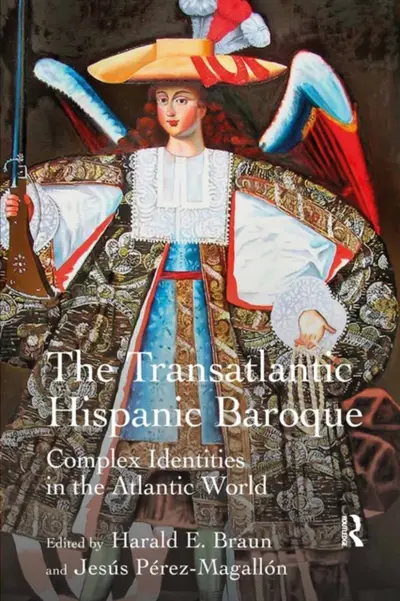
Transatlantic Hispanic Baroque
Complex Identities in the Atlantic World
Price and availability
$58.99
Available in: Andorra, Austria, Australia, Belgium, Bulgaria, Canada, Switzerland, Cyprus, Czechia, Germany, Denmark, Estonia, Spain, Finland, France, United Kingdom, Guernsey, Greece, Croatia, Hungary, Ireland, Isle of Man, Iceland, Italy, Jersey, Japan, Liechtenstein, Lithuania, Luxembourg, Latvia, Monaco, Malta, Netherlands, Norway, Poland, Portugal, Romania, Sweden, Slovenia, Slovakia, San Marino, United States, Vatican City, South Africa
Stores: US, UK, Canada, EU, Australia.
Sign in to buyThe price is re-checked by the server before payment.
For personal use under the eBook licence.
- Format
- DRM
- Not stated by the publisher
- Language
- English
- Publisher
- Taylor & Francis
- Published
- 3 March 2016
- ISBN
- 9781317013693
- Subjects
- Middle East, USA, Modern period, c 1500 onwards, Language: reference & general, History, General & world history, Middle Eastern history, Early modern history: c 1450/1500 to c 1700, Modern history to 20th century: c 1700 to c 1900, Social & cultural history, Industrialisation & industrial history, Colonialism & imperialism, Archaeology, Cultural studies, Ethnic studies, Hispanic & Latino studies, Spanish Empire, Cultural studies, History of the Americas, Social and cultural history
About this book
Gathering a group of internationally renowned scholars, this volume presents cutting-edge research on the complex processes of identity formation in the transatlantic world of the Hispanic Baroque. Identities in the Hispanic world are deeply intertwined with sociological concepts such as class and estate, with geography and religion (i.e. the mixing of Spanish Catholics with converted Jews, Muslims, Dutch and German Protestants), and with issues related to the ethnic diversity of the world's first transatlantic empire and its various miscegenations. Contributors to this volume offer the reader diverse vantage points on the challenging problem of how identities in the Hispanic world may be analyzed and interpreted. A number of contributors relate earlier processes and formations to Neo-Baroque and postmodern conceptualisations of identity. Given the strong interest in identity and identity-formation within contemporary cultural studies, the book will be of interest to a broad group of readers from the fields of law, geography, history, anthropology and literature.
Bibliographic data © Gardners Books Ltd.