PDF · English
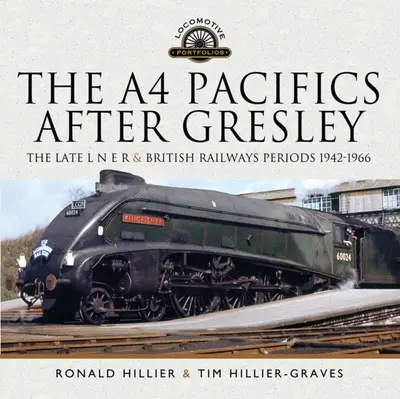
A4 Pacifics After Gresley
The Late L N E R and British Railways Periods, 1942-1966
Price and availability
$13.99
Not available to buy yet.
Available in: Andorra, Austria, Australia, Belgium, Bulgaria, Canada, Switzerland, Cyprus, Czechia, Germany, Denmark, Estonia, Spain, Finland, France, United Kingdom, Guernsey, Greece, Croatia, Hungary, Ireland, Isle of Man, Iceland, Italy, Jersey, Japan, Liechtenstein, Lithuania, Luxembourg, Latvia, Monaco, Malta, Netherlands, Norway, Poland, Portugal, Romania, Sweden, Slovenia, Slovakia, San Marino, United States, Vatican City, South Africa
Stores: US, UK, Canada, EU, Australia.
This title cannot be bought in this store yet: its supplier terms, territorial rights or price are still being confirmed.
For personal use under the eBook licence.
- Format
- DRM
- Not stated by the publisher
- Language
- English
- Publisher
- Pen & Sword Books
- Published
- 23 November 2023
- ISBN
- 9781399073462
- Subjects
- United Kingdom, Great Britain, c 1939 to c 1945 (including WW2), c 1945 to c 1960, c 1960 to c 1970, Trains & railways: general interest, Trains and railways: general interest
About this book
In their book 'Gresley's Silver Link' the authors analyzed the evolution of the A4s Gresley's and their service up to Gresley's death in 1941. This book takes this compelling story from the early years of the war up to their demise in the 1960s After four years of service pulling the LNER's most prestigious trains the A4s took on a more utilitarian role and for six years worked hard to support Britain's war effort. From this they emerged bowed, but unbeaten, although in an extremely jaded condition. Once restored they took up where they had left off in 1939 and did exceptional service for the rest of their days. With the help of previously unpublished material the authors analyze the second phase of the A4s careers, first as LNER engines, then, from 1948, under British Railways management. Without a diesel or electric fleet of engines to replace them they entered a second golden age of fast running in the '50s. Then in the 'Swinging Sixties' they faced, as some thought, a premature end as part of a much delayed modernization program. Until withdrawn from service they continued to astound their footplate crew and performed exceptionally well, even when maintenance standards had slipped and their condition had deteriorated. They were thoroughbreds and have become a fitting memorial to the master engineers who produced and sustained them for 30 years or more.
Bibliographic data © Gardners Books Ltd.